

The Real Story on Affordability in Silicon Valley Right Now
Affordability is one of the biggest conversations in real estate right now.
And if you are thinking about buying or selling in Silicon Valley, you deserve a clear and honest look at what is actually happening.
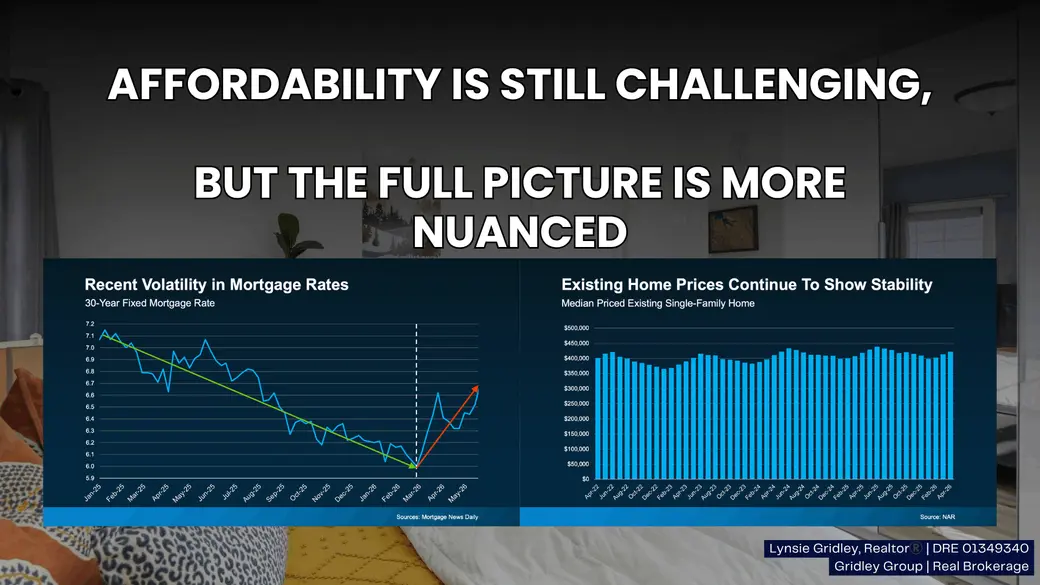
The truth is, affordability is still challenging. Mortgage rates are higher than buyers would like. Home prices have not dropped in a dramatic way. And monthly payments matter more than ever.
But the full picture is more nuanced than the headlines suggest.
Mortgage Rates Are Still a Major Factor
Mortgage rates have moved higher recently, and that has a direct impact on affordability.
In late May 2026, Freddie Mac reported the average 30-year fixed mortgage rate at 6.53 percent, which was the highest level in about nine months but still below the 6.89 percent average from one year earlier. Inflation concerns, oil prices, and broader economic uncertainty have all been contributing factors.
That is not the direction buyers were hoping for.
When rates rise, monthly payments rise too. That can affect how much home a buyer can comfortably afford, especially in a higher-priced market like Silicon Valley.
Why Waiting Is Not Always Simple
It is natural to wonder if waiting for lower rates makes sense.
Sometimes it might. But waiting also comes with uncertainty.
Rates may improve, but no one can know exactly when or by how much. Bankrate noted in its May 2026 mortgage rate outlook that more progress would be needed to push rates back below 6 percent, and that may be too much to expect in the near term.
That does not mean buyers should rush.
It means the better question is not simply, “Will rates come down? ”
The better question is, “Does buying make sense for my life, my budget, and my timeline right now? ”
Wages Are Helping, Even If It Does Not Always Feel Like It
There is another part of the affordability story that often gets less attention.
Wages have continued to grow.
The Federal Reserve Bank of Atlanta’s Wage Growth Tracker showed 3.6 percent wage growth in April 2026. That was lower than the prior month, but still meaningful in the broader affordability conversation.
At the same time, home price growth has been much more modest nationally. Redfin reported that the median United States home sale price rose 2.4 percent year over year in April 2026, while the National Association of Realtors reported the median existing home sales price was up 0.9 percent year over year in April.
That matters because when wages rise faster than home prices, some buyers slowly regain purchasing power.
It does not solve affordability overnight, especially in Silicon Valley. But it does help the math move in a better direction.
Home Prices Have Been More Stable Than Dramatic
A lot of buyers are waiting for prices to fall significantly.
But nationally, the data is showing more stability than collapse.
The National Association of Realtors reported that the median existing home sales price was $417,700 in April 2026, up 0.9 percent from one year earlier. Inventory also rose to 4.4 months, giving buyers more options than they had during the tightest years of the market.
That is important context.
Prices are not racing upward the way they were a few years ago. But they are not falling sharply nationwide either.
In Silicon Valley, the local picture can vary by city, neighborhood, price point, and property type. Some homes still attract strong interest. Others need more careful pricing and preparation.
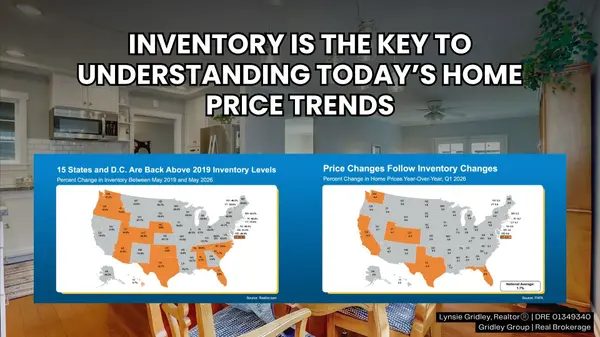
More Inventory Can Help Buyers
One helpful shift is that buyers have more choices than they did during the most competitive years.
More inventory can mean more time to compare homes, more room for negotiation in some situations, and a better chance of finding a home that fits both lifestyle and budget.
That does not mean every home is negotiable.
But it does mean buyers may not feel the same level of pressure they felt when inventory was extremely limited.
For sellers, this also matters. More options for buyers means pricing, preparation, and presentation are especially important.
What Buyers Should Do Now
If you are thinking about buying, focus on what you can control.
- Know your monthly payment comfort zone
• Talk with a trusted lender before you start shopping seriously
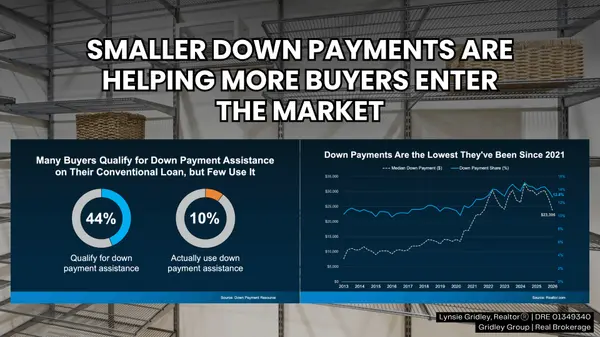
• Ask about loan options, rate buydowns, and assistance programs
• Compare homes based on total cost, not just list price
• Stay flexible on location, layout, and timing where you can
In today’s market, strategy matters.
What Sellers Should Understand
Affordability affects sellers too.
Buyers are paying close attention to value. They are comparing price, condition, location, and monthly payment before deciding whether to write an offer.
That means sellers need to be realistic and strategic.
A well-priced, well-presented home can still perform very well. But overpricing in an affordability-challenged market can cause buyers to move on quickly.
Bottom Line
Affordability is still difficult, and there is no need to pretend otherwise.
But the market is not one-dimensional.
Rates are higher than buyers would like. At the same time, wages have been growing, home price growth has moderated, and buyers have more options than they did during the most competitive years.
If you want to understand what the real numbers look like for your situation in Silicon Valley, I am always happy to help you think it through.
Recent Posts


Her expert knowledge, negotiation, and marketing skills combined with her high level of commitment provide a framework for lasting relationships. Lynsie commits to “Bringing you the Best!”