

Your Silicon Valley Home Did Not Sell. Here Is How To Turn It Around
When a home does not sell, the disappointment goes beyond the transaction.
It can disrupt your timing, delay your next move, and make you question whether selling was the right decision in the first place.
But an unsuccessful listing does not necessarily mean there is something wrong with your home. More often, it means the first strategy did not connect with current buyers.
Relisting can work, but only when the new approach is meaningfully different from the old one.
Start by Understanding What Went Wrong
Before putting the home back on the market, take an honest look at the first listing.
How many buyers viewed the home online?
How many scheduled a showing?
What feedback did they provide?
Were there offers that did not come together?
Did buyers consistently mention the same concern?
The answers can help identify whether the issue was price, presentation, exposure, condition, negotiation, or a combination of several factors.
Simply returning to the market without making changes is unlikely to create a different result.
The Price May Not Have Matched Buyer Expectations
Pricing is one of the most common reasons a home does not sell.
Sellers often look at what nearby homes sold for several months ago or focus on the amount they need for their next purchase. Buyers are looking at a different set of numbers.
They compare the home with what is available today. They also consider mortgage rates, monthly payments, condition, and the cost of needed improvements.
When a home feels even slightly overpriced, buyers may skip it rather than schedule a showing.
A successful relaunch should begin with fresh comparable sales and current competing listings. The objective is to choose a price that attracts attention, not one that requires buyers to overlook the market data.
The article also emphasizes that sellers who relist successfully often change their approach instead of waiting for the market to solve the problem.
The First Impression May Not Have Been Strong Enough
Most buyers first experience a home through a screen.
If the opening photo is dark, the rooms feel cluttered, or the listing does not communicate the property’s best features, buyers may scroll past without ever scheduling a tour.
The same issue can appear during an in-person showing.
Worn paint, dated lighting, visible maintenance needs, clutter, or neglected landscaping can create doubt. Each issue may seem small on its own, but together they can make the home feel like more work than a competing property.
Before relisting, walk through the home from a buyer’s perspective.
Consider:
- Fresh paint where needed
- Improved lighting
- Decluttering and thoughtful staging
- Landscaping and curb appeal
- Small repairs that affect buyer confidence
- New professional photography
The goal is not to make the home perfect. It is to help buyers understand its value quickly.
The Marketing May Need More Than a Refresh
Placing a property in the multiple listing service is an important step, but it should not be the entire marketing plan.
Buyers have more choices in many parts of today’s market. A home needs to stand out through clear positioning, strong photography, compelling property details, video, digital exposure, social media, open house strategy, and consistent follow-up.
The listing description should do more than list features. It should help buyers understand how the home lives and why its location matters.
In Silicon Valley, that may include proximity to employment centers, neighborhood amenities, parks, restaurants, transportation, or flexible spaces for work and daily life.
A relaunch should feel new because the strategy is new, not simply because the listing date changed.
Buyer Feedback Needs To Lead to Action
Showings without offers are still useful.
They tell you buyers liked the home enough online to visit. Something changed once they arrived.
Maybe the condition did not match the photography. Perhaps the rooms felt smaller than expected. The price may have seemed reasonable online but less compelling after the tour.
Feedback only helps when it is collected, interpreted, and used.
If several buyers mention the same issue, it is probably not random. It may be the clearest signal about what needs to change.
Negotiation May Have Been the Missing Piece
A home can be priced and marketed well and still fail to close if the negotiation strategy is too rigid.
Today’s buyers may request repairs, credits, help with eligible closing costs, or flexibility around timing.
That does not mean sellers should agree to everything.
It means each request should be measured against the larger goal.
A reasonable concession may cost less than returning to the market, continuing to carry the home, or accepting a lower offer later.
Before relisting, decide what matters most.
Is it the highest possible price?
A dependable closing?
A specific timeline?
Limited repairs?
Knowing your priorities makes it easier to negotiate thoughtfully when the next offer arrives.
Should You Relist With the Same Agent?
That decision depends on what happened the first time.
If the agent provided sound advice and the agreed strategy was not followed, relisting together with a clearer plan may make sense.
If the price, presentation, marketing, communication, or feedback process was not handled effectively, a fresh perspective may be valuable.
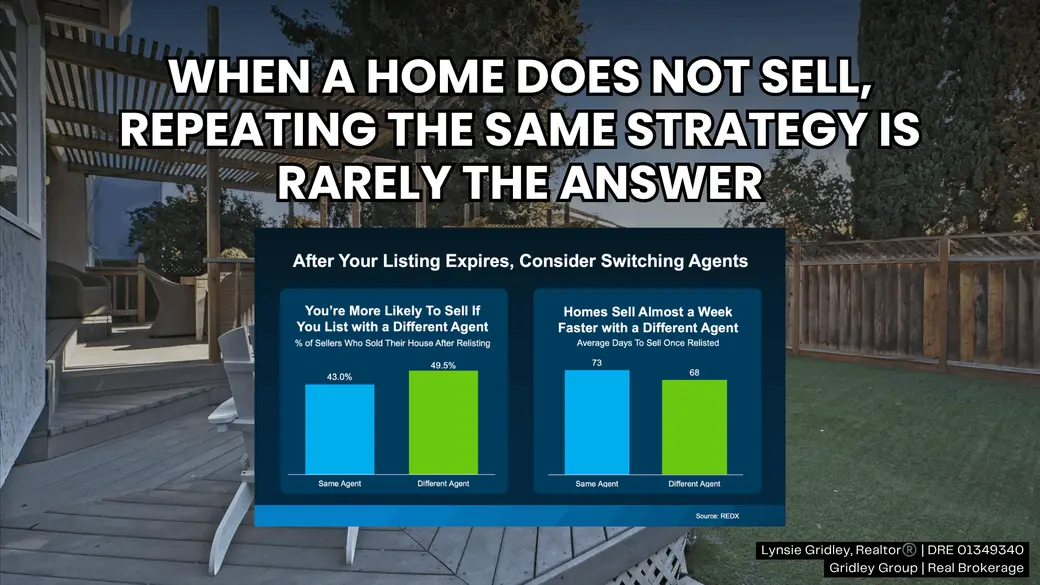
Research cited in the original article indicates that sellers who relist with a different agent may have a better chance of selling and may sell more quickly than those who repeat the same approach.
The most important question is not whether the agent is familiar.
It is whether the new plan directly addresses why the home did not sell.
Treat the Relaunch as a Reset
Buyers and agents can usually see a property’s listing history.
Taking the home off the market and putting it back without meaningful changes may raise more questions than interest.
A successful reset may include:
- A price supported by current data
- Repairs or improvements
- Updated staging
- New photography
- A stronger marketing plan
- A clear explanation of what changed
- Greater flexibility during negotiation
Recent guidance on relisting also recommends identifying exactly why the first attempt failed, then correcting the pricing, condition, or transaction issue before returning to the market.
Bottom Line
A home that did not sell the first time is not necessarily a home that cannot sell.
It may need a more realistic price, stronger presentation, broader marketing, better use of feedback, or a more flexible negotiation strategy.
If your Silicon Valley home came off the market without a sale, the next step is not to repeat the same process.
It is to understand what happened, make meaningful changes, and relaunch with a plan built for today’s buyers.
Recent Posts


Her expert knowledge, negotiation, and marketing skills combined with her high level of commitment provide a framework for lasting relationships. Lynsie commits to “Bringing you the Best!”