

Selling and Buying at the Same Time in Silicon Valley? Here Is Where To Start
If you own a home and are planning your next move, one of the biggest questions is usually this.
Should you sell your current home first or buy your next home first?
There is no single right answer.
The best plan depends on your finances, the equity in your current home, the market you are selling in, the market you are buying in, and how much flexibility you have around timing.
But in today’s market, many homeowners may find that selling first gives them more clarity, more buying power, and less financial stress.
Why This Question Feels Bigger Right Now
The market is more measured than it was a few years ago.
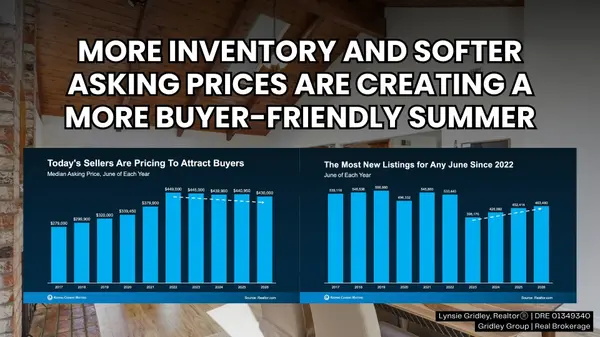
Homes are still selling, but buyers are more selective. Inventory has improved nationally, and some homes are taking longer to attract the right buyer.
NAR reported that June 2026 existing home sales were at a seasonally adjusted annual rate of 4.09 million, with 4.6 months of inventory. That is more supply than buyers had during the most competitive years but still below the 5 to 6 months often associated with a balanced market.
Realtor.com also reported that active inventory reached more than 1.1 million listings in June 2026, up 1.9 percent from one year earlier. The typical home spent 53 days on the market, the same as one year earlier after more than two years of homes taking longer to sell annually.
For Silicon Valley homeowners, this means timing matters.
Selling may not be instant, and buying may still be competitive depending on the neighborhood and price point.
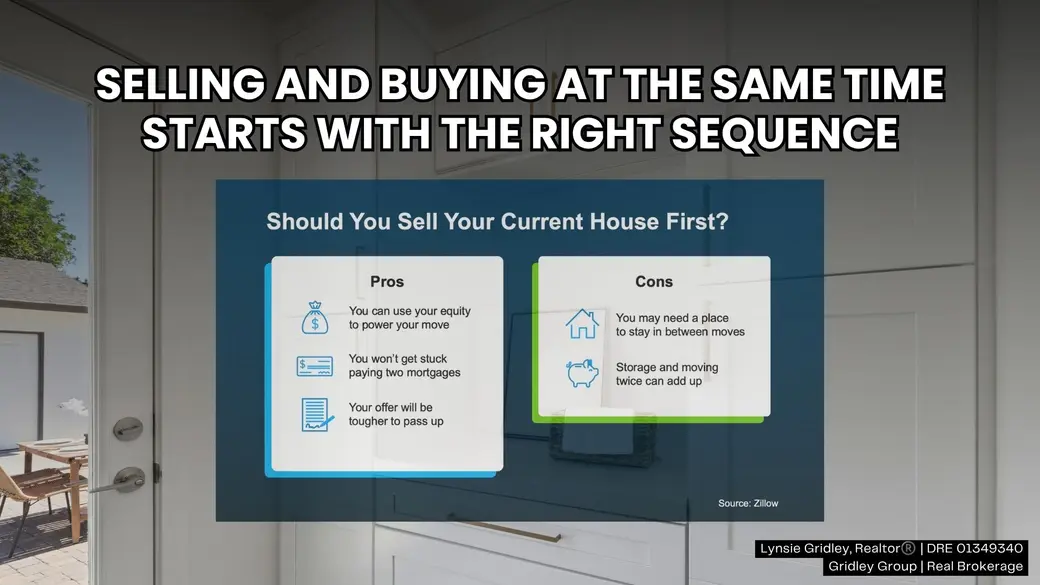
The Case for Selling First
Selling first can remove a major unknown.
When your current home sells, you know how much equity you have available, what your net proceeds are, and how much you can comfortably use toward your next purchase.
That can make the buying side feel more grounded.
It can also help you avoid carrying two mortgages at once.
Ramsey Solutions notes that selling before buying can help avoid the financial strain of paying two mortgages and reduce unnecessary risk.
In Silicon Valley, where monthly housing costs can be significant, that matters.
Even a short overlap between two homes can be expensive.
Your Equity May Be a Powerful Tool
For many homeowners, equity is the bridge to the next home.
Equity is the difference between what your home is worth and what you still owe on the mortgage.
When you sell first, you know how much equity you can use for your next move. That may help with the down payment, closing costs, reserves, or even a more competitive offer.
The article notes Realtor.com data showing homeowners who have owned for about 5 years have built roughly $180,000 in equity on average, while those who have owned for 6 to 10 years have more than $340,000 on average.
Your actual equity will depend on your purchase price, current value, loan balance, market conditions, and costs of sale.
In Silicon Valley, many longtime homeowners may have substantial equity, but the only number that matters is your actual net after selling.
Selling First Can Strengthen Your Next Offer
When your current home is already sold, you may not need to make your next purchase contingent on selling.
That can make your offer more attractive to the seller.
From the seller’s perspective, fewer contingencies can mean fewer risks. If they are choosing between two offers, the buyer who has already sold may look more certain than the buyer who still needs to get their current home under contract.
This can matter in Silicon Valley, where desirable homes can still attract strong interest even in a more selective market.
A cleaner offer may also give you more room to ask for terms that matter, such as repairs, timing flexibility, or seller credits when the situation supports it.
The Tradeoff: You Need Somewhere To Go
Selling first has one obvious challenge.
You may need temporary housing if you have not found your next home yet.
That could mean a rent back, short-term rental, staying with family, or arranging a flexible closing.
The Week’s summary of buy-sell timing options notes that there are middle ground strategies, including sale contingencies, renting out the old home, delayed closing, and working with an agent to coordinate timing and negotiation.
In California, rent back terms need to be handled carefully in the purchase agreement, and the details should be reviewed with the appropriate professionals.
But with the right planning, the transition can often be managed.
What About Buying First?
Buying first can make sense for some homeowners.
It may be the right approach if you have enough cash, can qualify for both homes, are comfortable carrying two payments, or are buying in a market where the right replacement home is extremely hard to find.
It may also help if you do not want to move twice.
But buying first comes with risk.
If your current home takes longer to sell than expected, you may carry two payments. If unexpected repairs or market feedback delay your sale, your budget may feel tighter than planned.
Some buyers also need the equity from their current home to complete the next purchase. In that case, buying first may not be realistic unless there is bridge financing or another strategy in place.
What Silicon Valley Homeowners Should Consider
Before deciding which comes first, look at the full picture.
Ask:
- How much equity do I have?
- How much will I net after selling costs?
- Can I qualify for the next home without selling first?
- Can I comfortably carry two mortgages if needed?
- How long are similar homes taking to sell?
- How competitive is the neighborhood where I want to buy?
- Would I consider a rent-back or temporary housing?
- How much flexibility do I have on timing?
- What repairs or preparation does my current home need before listing?
The right answer depends on your numbers and your tolerance for risk.
The Best Plan Is Built Before You List
The smoothest buy/sell moves are usually planned early.
That means preparing your current home, reviewing your equity, talking with a lender, understanding your buying power, and mapping out timing options before you are under pressure.
It also means being realistic about the market.
If your current home is priced and presented well, you may be able to sell with confidence. If it needs work or sits in a more competitive price range, you may need more flexibility.
Bottom Line
Selling and buying at the same time can feel complicated, but it becomes much easier with a clear plan.
For many Silicon Valley homeowners, selling first can reduce financial risk, clarify your equity, and strengthen your next offer.
But the right strategy depends on your personal finances, your local market, and your timeline.
Before deciding whether to sell first or buy first, review the numbers, the risks, and the options available for your specific move.Recent Posts



Her expert knowledge, negotiation, and marketing skills combined with her high level of commitment provide a framework for lasting relationships. Lynsie commits to “Bringing you the Best!”