The Case for Putting 20% Down on Your Next Silicon Valley Home
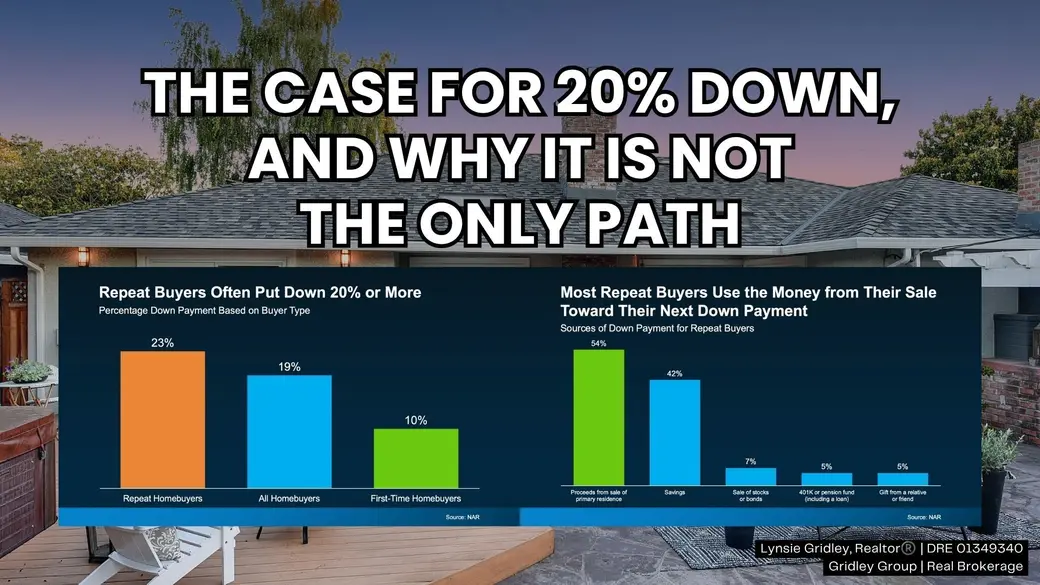
For years, buyers have heard two different messages about down payments.
One says you do not need 20% down to buy a home.
The other says 20% down is still a powerful advantage.
Both can be true.
There are many loan programs that allow qualified buyers to purchase with less than 20% down. That can be a smart path for some buyers, especially if waiting would delay homeownership for years.
But if you have the ability to put 20% down, there are real benefits worth understanding, especially in a higher-cost market like Silicon Valley.
A Larger Down Payment Can Lower Your Monthly Payment
The more you put down, the less you need to borrow.
That usually means a lower monthly mortgage payment.
In Silicon Valley, this can matter a lot because home prices are higher than the national average. A larger down payment may help reduce the loan amount, improve monthly affordability, and give you more breathing room after closing.
A smaller loan can also mean less interest paid over time, depending on the rate, loan type, and how long you keep the mortgage.
Putting 20% Down Can Help You Avoid PMI
For conventional loans, buyers who put down less than 20% are typically required to pay private mortgage insurance, often called PMI. Freddie Mac explains that PMI is usually required when the down payment is under 20% and can be removed once the homeowner builds 20% equity.
PMI protects the lender, not the buyer.
It can still be useful because it allows buyers to purchase sooner with less cash upfront. But it does add to the monthly cost.
If you can put 20% down, you may be able to avoid that extra monthly expense.
A Larger Down Payment May Improve Loan Terms
The Consumer Financial Protection Bureau says buyers can often save money by putting at least 10% down and may save the most by putting at least 20% down. It also notes that different down payment levels can affect costs and loan options.
That does not mean every buyer should automatically put down every dollar they have.
But it does mean your down payment can affect the full structure of the loan.
A larger down payment may help with loan approval, monthly payment, interest cost, and overall affordability.
A Bigger Down Payment Can Strengthen Your Offer
In a competitive market, sellers often look at more than the offer price.
They also consider the buyer’s financing, down payment, contingencies, appraisal risk, and probability of closing.
A larger down payment can signal financial strength. It may reassure the seller that the buyer has more resources and may be better positioned to complete the purchase.
That can matter in Silicon Valley, where well-priced homes in desirable neighborhoods can still attract serious interest.
It does not guarantee your offer will win.
But it can help your offer look stronger.
It Can Also Create More Equity From Day One
Equity is the difference between what your home is worth and what you owe on the mortgage.
When you put more down, you begin with more equity.
That can provide a cushion if the market softens. It can also give you more flexibility later if you refinance, sell, remodel, or need to access home equity.
The CFPB notes that a larger down payment gives buyers more of a cushion if prices decline.
That cushion can be especially meaningful in a high-value market where price movements can involve large dollar amounts.
But 20% Down Is Not the Only Path
This part is important.
You do not always need 20% down to buy a home.
Freddie Mac says typical down payments can range from 5% to 20%, and some programs allow down payments as low as 3%.
Realtor.com reported that the median down payment fell to $23,400 in the first quarter of 2026, down 19% from one year earlier and the lowest level since 2021. The median down payment was 12.8% of the purchase price.
That shows many buyers are purchasing with less than 20% down.
For some buyers, that is the right move.
Waiting to save 20% could mean delaying homeownership, missing the right home, or continuing to pay rent while prices and life circumstances change.
Do Not Drain Your Savings Just To Hit 20%
Putting 20% down can be helpful, but it should not leave you financially exposed.
Homeownership comes with costs beyond the down payment.
You still need money for:
- Closing costs
- Moving expenses
- Repairs
- Furniture
- Insurance
- Property taxes
- Utilities
- Maintenance
- Emergency reserves
- Future improvements
In Silicon Valley, keeping reserves after closing is especially important. Older homes, higher property taxes, insurance costs, and maintenance can add up quickly.
The strongest plan is not always the largest possible down payment.
It is the down payment that leaves you with a comfortable monthly payment and enough savings after closing.
What Silicon Valley Buyers Should Compare
Before deciding how much to put down, ask your lender to compare several options.
Look at:
- 5% down
- 10% down
- 15% down
- 20% down
- Monthly payment differences
- PMI costs
- Interest rate differences
- Closing costs
- Cash left after closing
- Total cost over time
- How each option affects your offer strength
This will help you see whether 20% down is truly the best move or whether a smaller down payment gives you more flexibility.
What Sellers Should Know
For sellers, a buyer with 20% down may appear financially stronger, but down payment is only one part of the offer.
A buyer with less than 20% down can still be well qualified.
Sellers should look at the full offer, including lender approval, contingencies, appraisal risk, deposit amount, closing timeline, and overall likelihood of closing.
The strongest offer is not always the one with the biggest down payment.
It is the one most likely to close cleanly and meet the seller’s goals.
Bottom Line
There are real advantages to putting 20% down.
It can lower your monthly payment, help you avoid PMI, reduce interest costs, strengthen your offer, and give you more equity from day one.
But it is not the only path to homeownership.
For Silicon Valley buyers, the best decision depends on your savings, income, loan options, comfort level, reserves, and long-term plans.
The right down payment is not just about reaching a percentage. It is about creating a home purchase you can comfortably sustain.
Recent Posts


Her expert knowledge, negotiation, and marketing skills combined with her high level of commitment provide a framework for lasting relationships. Lynsie commits to “Bringing you the Best!”