

That Silicon Valley Home That Has Been Sitting May Be Worth Another Look
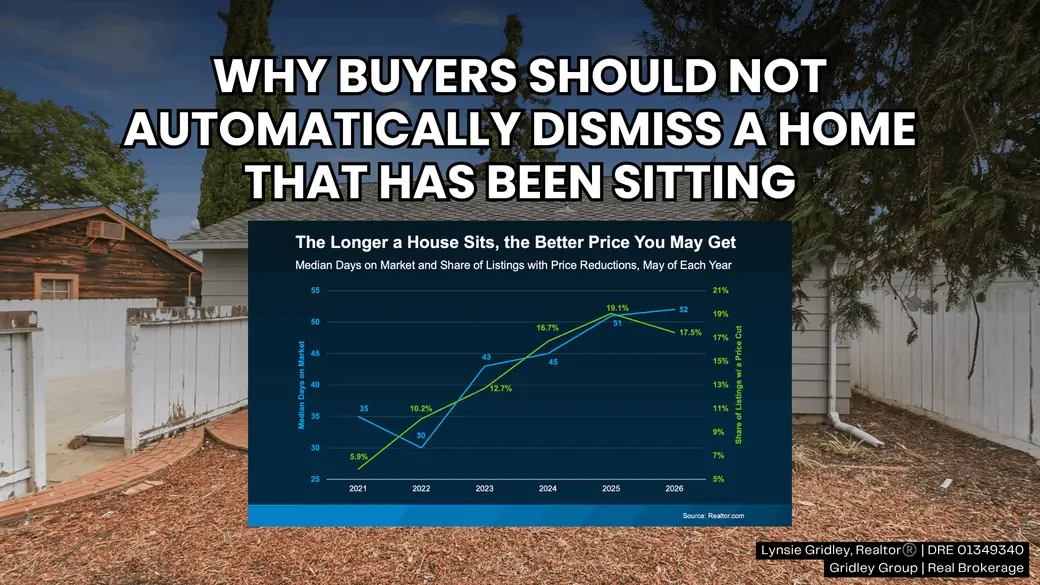
When buyers see a home that has been on the market for a while, the reaction is often immediate.
What is wrong with it?
Sometimes there is a genuine concern. But sometimes the home was simply priced too high at first, photographed poorly, overlooked during a busy week, or passed over because buyers were focused on newer listings.
In today’s more balanced market, a home that has been sitting may offer something a newly listed property does not.
Room for a conversation.
The latest Simplifying the Market article encourages buyers not to automatically dismiss older listings, because they may provide one of the better opportunities to negotiate.
Days on Market Do Not Tell the Whole Story
Days on market measure how long a property has been available. They do not explain why it has not sold.
A home may sit because:
- The original price was too ambitious
- The photos did not represent it well
- The home needs cosmetic improvements
- It entered the market during an unusually busy period
- Buyers were distracted by more polished listings
- The right buyer had not seen it yet
None of those explanations automatically makes the home a bad purchase.
The better question is whether the property, condition, location, and current price make sense for you.
Why Older Listings Can Offer More Negotiating Room
A seller who has been on the market for several weeks may be more open to discussing terms than a seller who just listed.
That does not mean the seller is desperate. It means the seller may have received enough market feedback to reconsider what is most important.
Depending on the property and local activity, a buyer may be able to discuss:
- The purchase price
- Credits toward eligible closing costs
- Repair requests
- Included appliances
- A flexible closing date
- An approved mortgage rate buydown
- Other terms that help both sides move forward
The opportunity may be found in the structure of the offer, not just a lower price.
Do Not Assume the Listing Price Is the Final Price
The asking price is an invitation to negotiate. It is not always the number at which the home will ultimately sell.
Before making an offer, buyers should review recent comparable sales, current competition, property condition, and the seller’s pricing history.
A home that seemed overpriced a month ago may become more reasonable after a reduction. It may also be worth an offer below the asking price if the local data supports it.
The goal is not to submit an arbitrary low offer.
The goal is to make a thoughtful offer based on the home’s likely market value.
A Longer Market Time Can Give You Space To Think
New listings can create urgency.
Buyers may feel pressure to tour immediately, decide quickly, and compete before they have had enough time to understand the property.
An older listing may allow for a more measured process.
You may have time to:
- Tour the home more than once
- Review disclosures carefully
- Ask additional questions
- Evaluate renovation costs
- Compare nearby sales
- Discuss financing options
- Think about how the home fits your longer term plans
That breathing room can be valuable in Silicon Valley, where the financial commitment is significant.
Look Beyond Cosmetic Issues
Some homes sit because they do not make a strong first impression.
Outdated paint, older flooring, dated fixtures, or an empty interior can make a home feel less appealing online. But many cosmetic issues can be changed more easily than the location, lot, floor plan, or neighborhood.
A home that needs light updating may offer better value than a polished home that attracts immediate competition.
The key is separating cosmetic concerns from more substantial issues.
Inspections, disclosures, and qualified professionals can help you understand the difference.
There May Still Be a Good Reason the Home Has Not Sold
An older listing should be investigated, not blindly embraced.
The home could have condition concerns, an awkward layout, an undesirable location, unresolved permit questions, or a price that remains disconnected from the market.
Buyers should ask:
- Has the property been under contract before?
- Were any prior transactions cancelled?
- Has the price changed?
- Are there known inspection concerns?
- How does the home compare with recent sales?
- What feedback has the seller received?
- Is the seller open to negotiation?
A longer market time can create an opportunity, but due diligence still matters.
What This Means for Silicon Valley Buyers
Silicon Valley is not one uniform market.
A home may sit because it is overpriced for its neighborhood. Another may sit because its price range has a smaller buyer pool. Another may have been overlooked even though it is a solid property.
That is why buyers should not rely solely on the number of days displayed online.
The right home may not be the newest listing.
It may be the home other buyers stopped noticing.
Bottom Line
A home that has been sitting is not automatically a problem.
It may be a property that needs closer evaluation, a more realistic price, or the right offer structure.
For buyers, older listings can offer more time, less immediate competition, and potentially more room to negotiate.
If you are searching in Silicon Valley, it may be worth revisiting the homes you previously scrolled past. One of them could look very different when viewed with fresh eyes and the right local context.
Recent Posts






Her expert knowledge, negotiation, and marketing skills combined with her high level of commitment provide a framework for lasting relationships. Lynsie commits to “Bringing you the Best!”