

Why Mortgage Rates Are Still Near 7% and What Silicon Valley Buyers Should Know
If you have been waiting for mortgage rates to make a dramatic move lower, it helps to understand what is actually keeping them where they are.
Mortgage rates do not simply move up or down because the Federal Reserve changes its short-term interest rate. They are closely connected to the 10-year Treasury yield, which reflects investor expectations about inflation, economic growth, Federal Reserve policy, and risk across the economy.
For Silicon Valley buyers and sellers, understanding that relationship can make today’s rate environment a little less confusing.
Mortgage Rates Follow More Than the Fed
The August 12 Simplifying the Market report highlights the long-standing relationship between mortgage rates and the 10-year Treasury yield.
The difference between the two is commonly called the mortgage spread.
Historically, that spread has averaged about 1.76 percentage points. During the uncertainty of 2023, it widened to roughly 3.19 points. More recently, it has narrowed to about 2.01 points.
That narrowing matters.
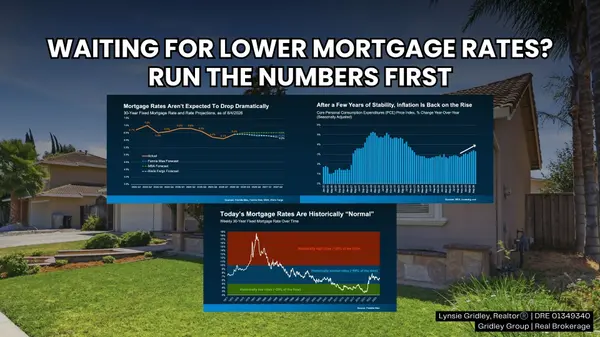
Using the Treasury yield cited in the August 12 report, a wider spread like the one seen in 2023 could put mortgage rates close to 8%. Instead, Freddie Mac reported an average 30-year fixed mortgage rate of 6.69% for the week ending August 6.
In other words, rates are still challenging, but they could be higher given where Treasury yields are today.
Why That Also Matters for Future Rate Drops
There is another side to the narrowing spread.
When the spread was unusually wide, there was room for mortgage rates to improve simply because that gap returned toward normal.
Much of that adjustment has now happened.
The current spread cited in the report is only modestly above its long-term average. That means a substantial additional decline in mortgage rates would likely require the underlying Treasury yield to fall too, rather than relying primarily on further improvement in the spread.
That does not tell us exactly where mortgage rates will go next. Rates can change quickly as economic information changes.
It does explain why waiting for a large drop may not be as straightforward as it sounds.
Inflation Is Still Part of the Equation
The newest inflation data provides some encouraging context, but it does not remove all of the pressure on interest rates.
The Consumer Price Index increased 0.1% in July. Inflation was 3.4% over the prior 12 months, down slightly from 3.5% in June. Core inflation, which removes food and energy, was 2.5% over the year.
The Federal Reserve continues to describe inflation as elevated relative to its 2% goal. At its July meeting, the Fed kept its federal funds target range at 3.5% to 3.75%.
Mortgage markets respond to how investors interpret information like this, not simply to whether the Fed announces a rate change.
Why Small Rate Changes Matter More in Silicon Valley
The impact is magnified in a high-cost housing market.
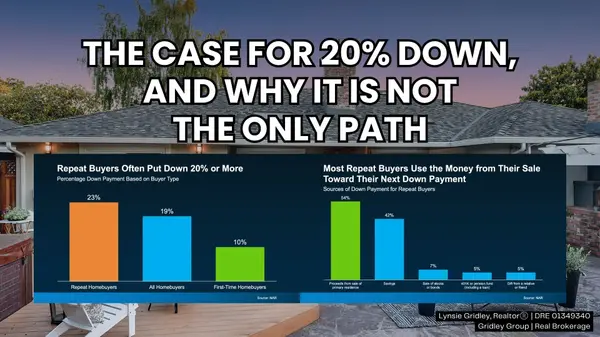
C.A.R.’s second-quarter affordability study used a Santa Clara County median single-family home price of $2.05 million. Under its assumptions, including a 20% down payment and a 6.54% effective mortgage rate, the estimated monthly payment including principal, interest, taxes, and insurance was $12,770. The required qualifying income was $510,800.
Those are countywide affordability calculations, not a prediction of what any individual buyer will pay.
But they show why Silicon Valley buyers pay close attention to relatively small movements in mortgage rates.
At our price points, a fraction of a percentage point can meaningfully affect the monthly payment.
Buyers Should Focus on the Payment They Can Actually Afford
Trying to predict the exact bottom in mortgage rates is difficult.
A more practical approach is to understand what works financially today.
Ask your lender to show you how the payment changes at several interest rates and purchase prices. Look at the complete housing cost, including property taxes, insurance, HOA dues when applicable, and expected maintenance.
It is also worth remembering that Freddie Mac’s national mortgage survey is a benchmark based on conventional conforming purchase loans. The rate available to an individual Silicon Valley buyer can differ based on loan amount, credit profile, down payment, property type, and other factors.
Sellers Should Understand Buyer Payment Sensitivity
Mortgage rates matter to sellers too.
When financing costs rise, some buyers adjust their price range. Others become more selective about condition, location, and how much additional money a property may require after closing.
That makes pricing and presentation especially important.
Santa Clara County still had just 1.7 months of unsold inventory in June, with a median market time of 11 days. Limited inventory can support desirable homes, but buyers are still paying close attention to value.
A strong seller strategy should account for both sides of that equation.
The Bottom Line
Mortgage rates are not sitting near current levels for one simple reason.
They reflect Treasury yields, the mortgage spread, inflation expectations, economic conditions, and investor sentiment.
The mortgage spread has already improved significantly from the unusually wide levels seen a few years ago. That has helped keep rates lower than they otherwise might be. It also means future rate improvement may depend more heavily on what happens in the broader economy and bond market.
For Silicon Valley buyers, the practical question is not simply, “Will rates fall?”
It is, “What payment works for me, and what opportunities are available at that payment?”
For sellers, understanding affordability helps you understand the buyer sitting across the table.
That is much more useful than trying to predict the next rate move.
Recent Posts




Her expert knowledge, negotiation, and marketing skills combined with her high level of commitment provide a framework for lasting relationships. Lynsie commits to “Bringing you the Best!”